By the NIPA Palma team
A well-woven natural palm roof has something no panel fully matches: the irregularity of the hand, the smell of dry leaf, the way each roof ages differently. Synthetic palm thatch exists for projects where that image has to outlast the leaf's cycle. Neither is better at everything, and deciding means knowing what weighs most in your project.
On the synthetic side we talk about NIPA, the one we know in depth. On the natural side, the leaf each region traditionally roofs with: zacate or guano in Mexico, cana in the Dominican Republic, palma amarga in Colombia.
Where natural palm wins
Detail at arm's length
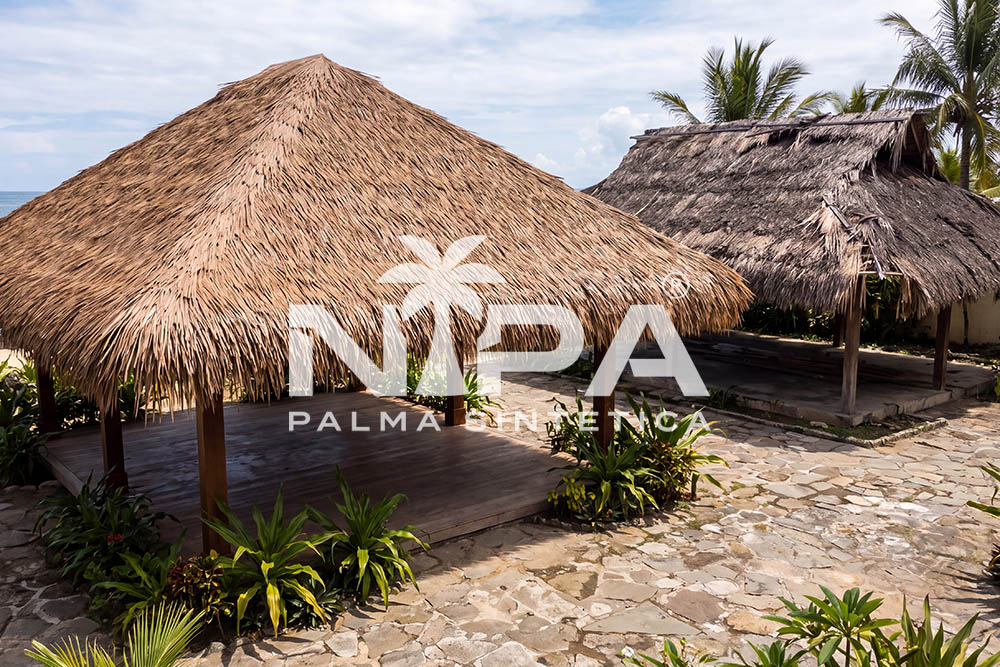
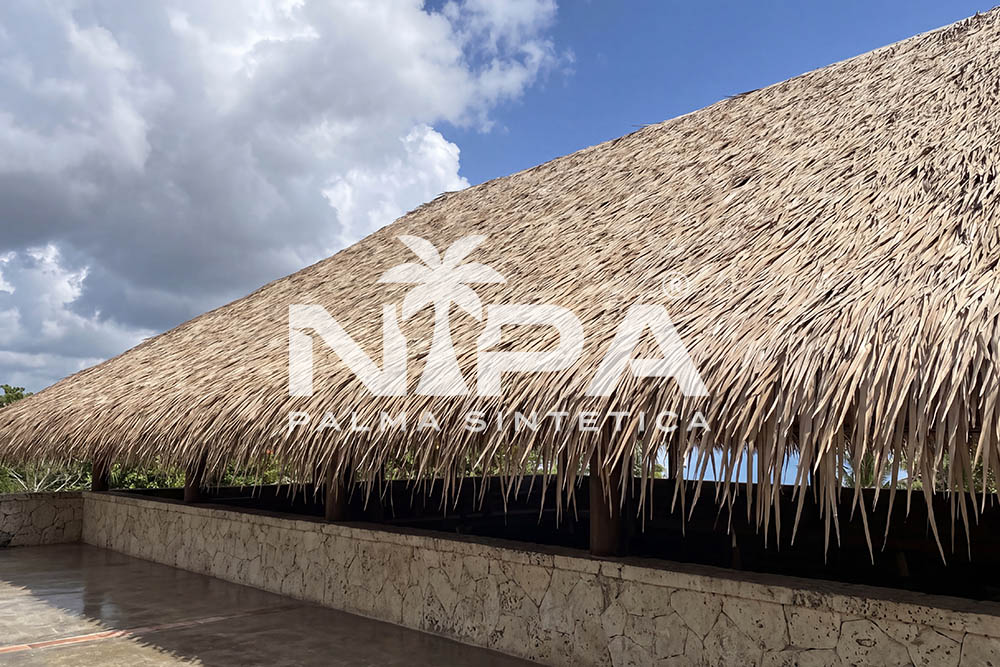
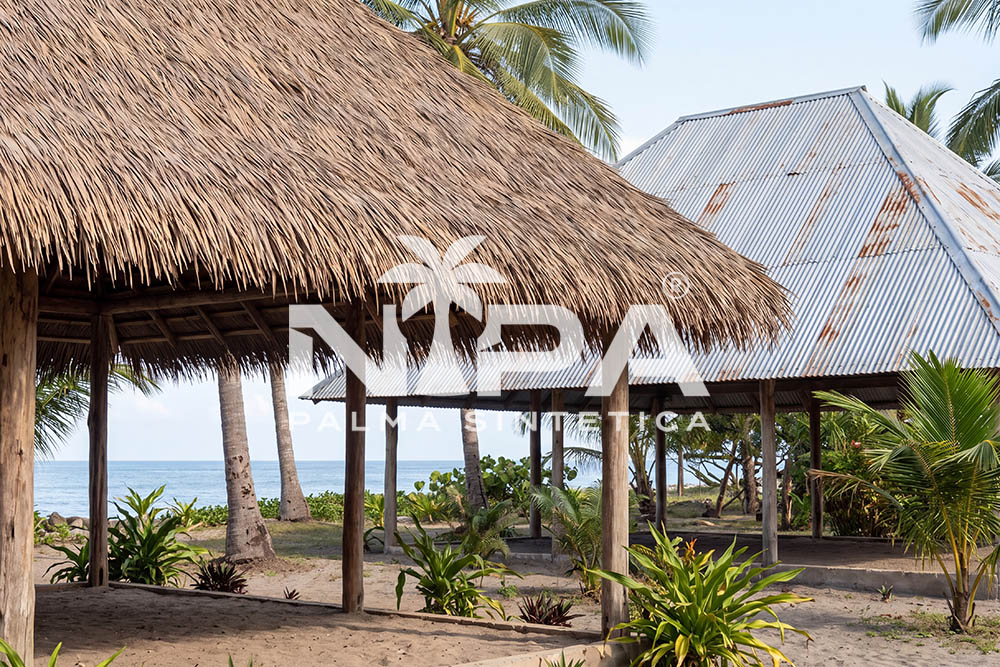
At arm's length, freshly laid natural leaf has a variety of lengths, thicknesses and tones that a panel molded from real leaf reproduces very well, though not completely. For anyone looking for exactly that patina, maintenance included, natural leaf is the right answer.
Craft and the local economy
A leaf roof provides work for local thatchers and is repaired in sections with local material. In heritage or cultural buildings —the bohío, the caney of the Llanos, the palapa woven by craftspeople—the technique is part of the building's value.
Cost on installation day
Where palm and thatchers are close by, natural leaf usually costs less at the time of roofing. The difference plays out over the following years.
End of life
Leaf is biodegradable. NIPA panels are 100% recyclable and PVC-free, but recycling them requires a collection circuit that leaf does not need.
Where NIPA synthetic palm thatch wins
Appearance over the years
With sun and humidity, natural leaf turns gray, loses density and, on humid coasts, is renewed sooner. NIPA synthetic palm thatch passed 5,000 hours of accelerated weathering to ASTM G155, verified by an independent laboratory in Canada. It is a test for comparing color stability between materials, not a prediction of years. What backs the investment in writing is the 20-year warranty: it covers UV degradation, fading and structural failure of the panels.
Humidity
NIPA panels resist mold, do not rot and do not need the periodic re-treatments of natural leaf. Maintenance comes down to visual checks, especially after strong winds.
Fire
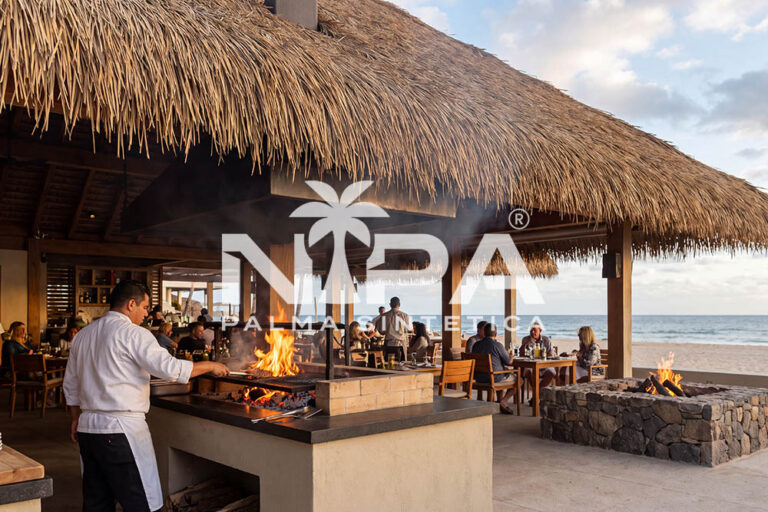
Natural leaf is combustible and relies on fire-retardant treatments that have to be reapplied. NIPA's FR version has a Class A rating under ASTM E108, tested by Intertek; the standard version is not rated.
A consistent ensemble
With one specification, all of a hotel's roofs share tone and texture even when installed in different years. With natural leaf, each roof shows its own age.
To see the product specifications one by one, see the advantages of NIPA Palma over natural palm.
What neither one solves
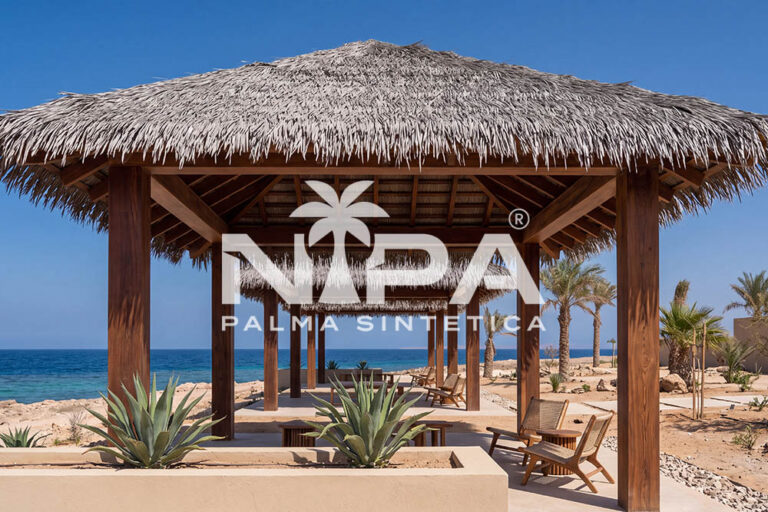
The structure is the same decision with any leaf: the timber is still combustible and is inspected and protected the same way. Watertightness depends on the pitch —for NIPA, 18° minimum— and on the details. And in a hurricane, the roof covering is only one part: the NIPA system withstands up to 260 km/h when installed to our fixing specifications, but the whole palapa depends on its structure and anchors.
How to compare cost with your own data
We do not publish a price per square meter, because it varies with the country, roof shape, access and installation. Nor do you need an average: the best data is your own hotel's history. How long the last leaf roof lasted, what it cost to renew, how many days the area was closed and which treatments were applied between one renewal and the next.
With those numbers, the comparison is built over the same horizon: the natural roof with its expected renewals, against the NIPA roof with its initial installation. If leaf lasts many years on your coast and the area has no fire nearby, natural may come out ahead. If it is renewed often, if the area requires the FR version or if closing the area is costly, the balance shifts.
Compare it with your last renewal
If you have on hand what the last leaf renewal cost, send it to us with the measurements or a few photos of the palapa. We will prepare a NIPA proposal so you can compare it with your own figures, line by line. You can write to us through the contact form.
Frequently asked questions
Is it hotter underneath than under a leaf roof?
A thick leaf roof insulates through its mass; the panel works through shade and ventilation. In open palapas, how warm it feels depends mainly on height, pitch and ridge ventilation. We have no published comparative measurements, so we do not claim that one is cooler than the other.
How long does NIPA synthetic palm thatch last?
The panels have a 20-year warranty. The 5,000 hours of the ASTM G155 test are used to compare materials and do not translate into an exact number of years of use.
Can the two be combined in the same hotel?
Yes. For example, natural leaf in an area of craft or heritage value and NIPA synthetic palm thatch on the restaurant with a kitchen or on the most heavily used structures. What matters is that the difference in appearance is a design decision and not a patch.