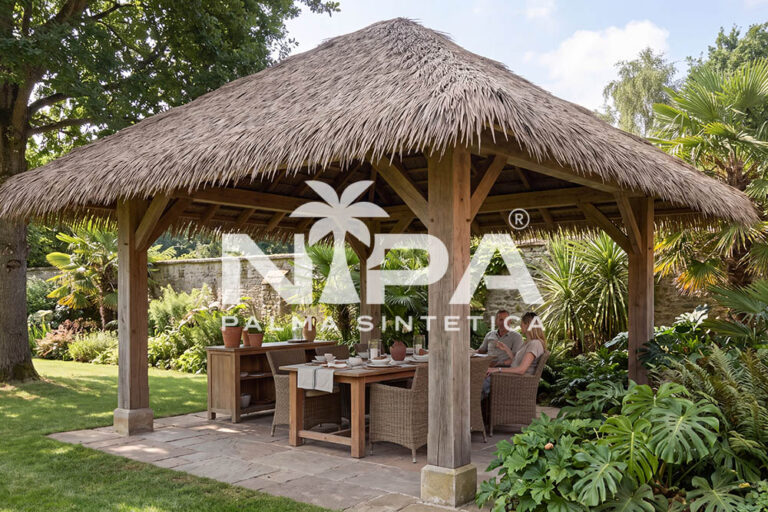
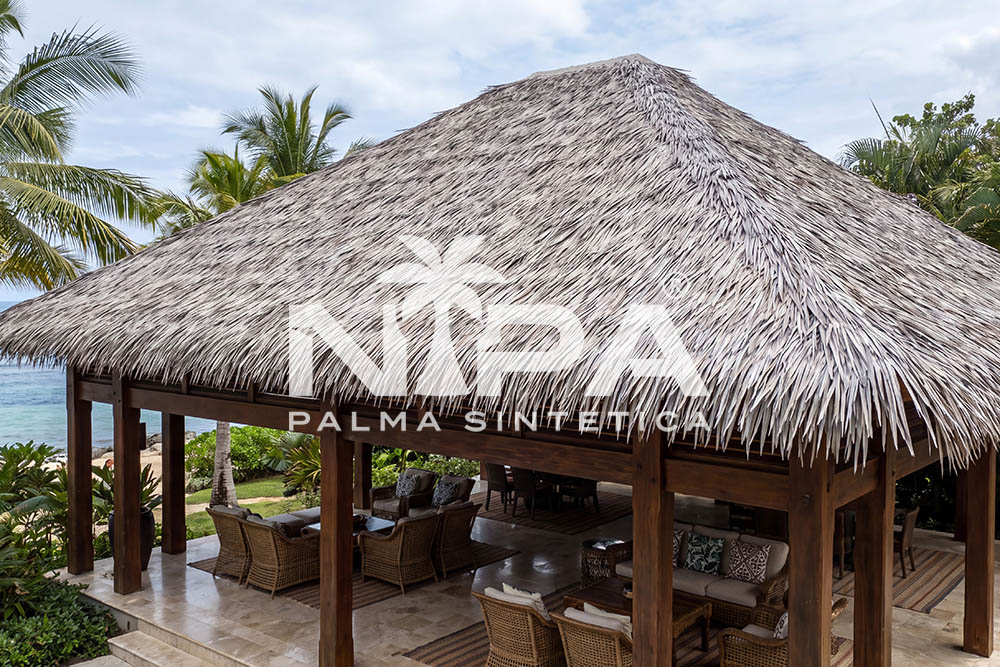
To replace thatch roof covering on a palapa with NIPA® synthetic thatch, you can almost always keep the existing structure: if the wood is sound and the roof has a pitch of at least 18°, you simply remove the natural palm thatch, fit open battens and install the NIPA leaves. That way you swap the periodic replacement of natural palm for a roof covering with a 20-year warranty against rot, deterioration and sudden color loss.
This guide helps you decide whether to restore or replace, whether to go for a full or partial replacement, and how to check your structure before requesting a quote. If you first want to understand all the materials, see our complete palm thatch roof guide.
Replace thatch roof or repair the structure: what does your palapa need?
It depends on the condition of each part. In run-down palapas, the problem is usually the thatch: dry, opened up, leaking or infested. The timber structure, on the other hand, can stay sound for years if it was well protected. This table helps you read the symptoms:
| What you see | What it usually means | What to do |
|---|---|---|
| Leaks, dry or gray leaves | Roof covering at the end of its life | Replace the roof covering, keep the structure |
| Nests, scorpions or insects in the thatch | Degraded natural palm | Switch the roof covering to NIPA synthetic thatch |
| Hollow wood, dust, loose joints | Termites or rot in the structure | Repair the structure before re-roofing |
| Leaning posts or rotten bases | Foundation failure or damp | Inspection by an engineer; possible palapa rebuild |
| Pitch under 18° | Does not meet the NIPA minimum pitch | Adjust the structure to reach 18° |

Can you remove thatch roof covering and keep the timber? Checklist
Before requesting your quote, check these five points or send us photos so we can review them with you:
- Pitch: measure the angle of each roof slope; NIPA synthetic thatch needs a minimum pitch of 18°.
- Timber: check posts, beams and joints; look for hollow wood, termite dust, cracks and rot at the bases. Beams should be spaced 46 to 92 cm apart, center to center.
- Battens: NIPA thatch is installed on open battens, spaced 22 cm center to center with a section of 31 to 57 mm. If your palapa has poles or cane, new battens are fitted; if it already has battens, check them for rot or mold and re-space them at 22 cm.
- Anchoring: make sure the posts are firm and anchored, especially in hurricane zones.
- Measurements: note the length, width and height of the palapa, or take photos, to calculate the material (one box of 70 pieces covers about 13.5 m²).
If the structure passes the check
Your palapa renovation is then limited to the roof covering: there is no need to build from scratch. If it fails, repair first; roofing over damaged timber only moves the problem elsewhere.
Full or partial rethatching?
With natural palm, the grass or palm thatch is usually replaced bit by bit as it deteriorates. With NIPA synthetic thatch, the simplest approach is to replace the whole roof covering of the palapa, or at least an entire roof slope: old natural palm and new synthetic leaves neither look the same nor shed water the same way.
| Item | Re-roof with natural palm | Re-roof with NIPA® synthetic thatch |
|---|---|---|
| Cycle | Periodic replacement of the roof covering | 20-year warranty against rot, deterioration and sudden loss of color |
| After installation | Fumigation, sealant and leaf replacement | Lower maintenance: periodic inspection and cleaning |
| Water | Depends on the thickness and condition of the leaves | Fully waterproof |
| Wind | Dry leaves come loose | Wind resistance of 260 km/h, installed to NIPA specifications |
| Base | Poles or cane | Open battens |
| Material calculation | By bundle or piece, depending on the region | 5.2 pieces per m²; box of 70 pieces ≈ 13.5 m² |
The last thatch roof investment your palapa will need
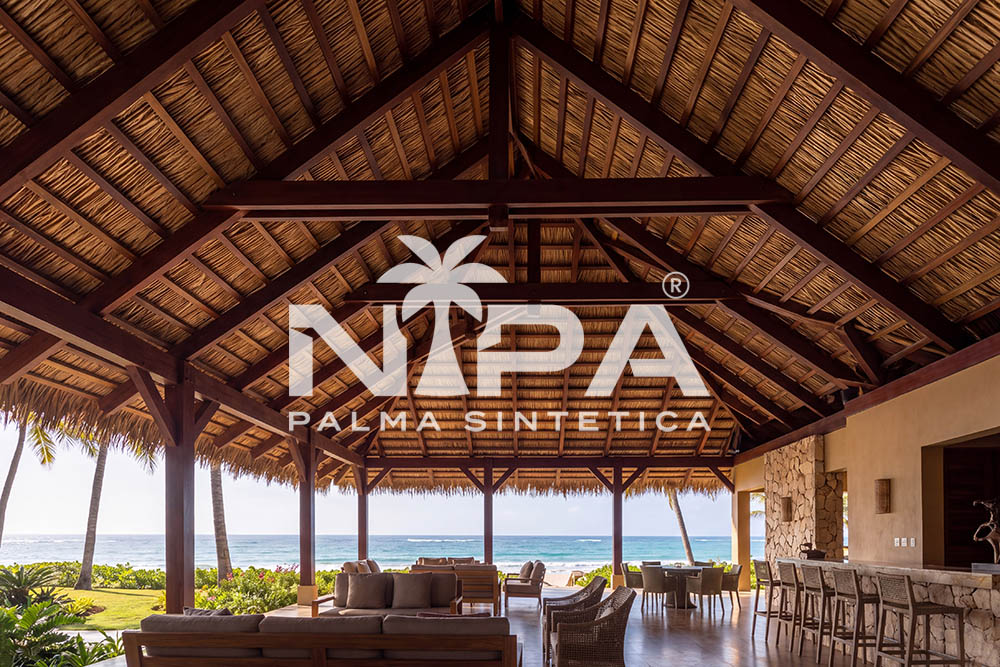
Every natural palm re-roof is a bill that keeps coming back. With NIPA synthetic thatch, renovating an existing palapa becomes a long-term investment: the last roofing investment your property will need, with leaves molded from real palm leaves that keep their original color for decades.
For hotels and restaurants, a NIPA roof replacement can be scheduled for the low season and is quoted factory direct. Next, see what changes in palapa maintenance with a synthetic roof covering. If your palapa was damaged by a storm, also read our guide to palapas and hurricanes.
Ranchos and sobretechos in Costa Rica and Panama
In Costa Rica and Panama people talk about ranchos and sobretechos (roof overlays) rather than palapas. Ranchos built and renovated with natural palm are common there, and sobretechos in natural sabal palm are widespread. The logic is the same as for a palapa: renovating or repairing a rancho can reuse the existing structure to install NIPA synthetic thatch on open battens, with a minimum pitch of 18°.
For builders who want to offer their clients a roof covering with a 20-year warranty, NIPA is the best choice in synthetic palm thatch: direct manufacturer since 2010, fully waterproof leaves and wind resistance of 260 km/h when installed to NIPA specifications. Read more about synthetic thatch in Costa Rica on our page for that country.
How to replace thatch roof covering on a palapa: the process
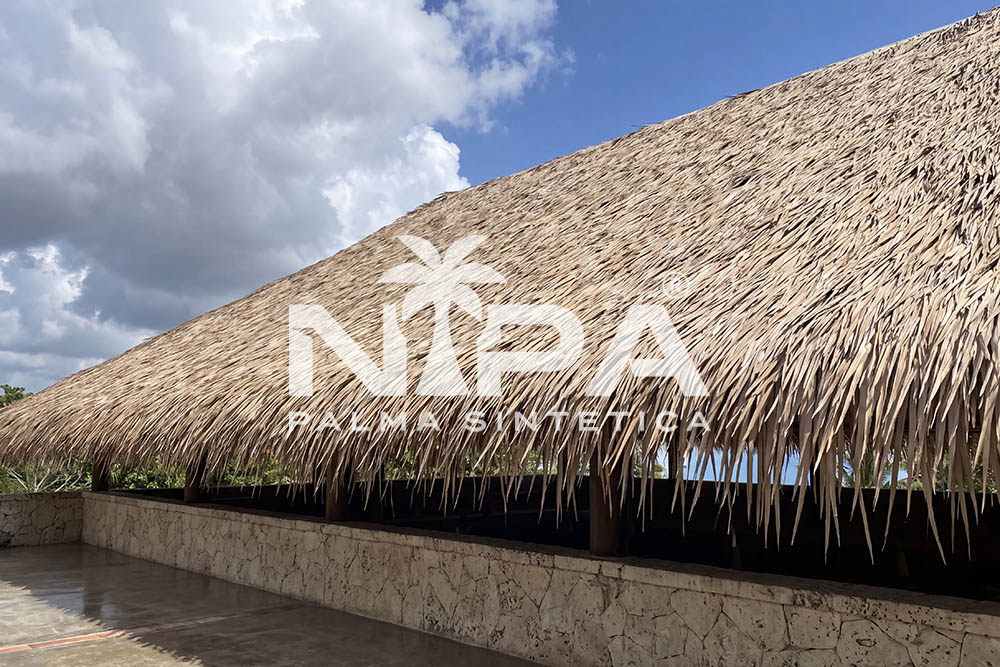
Your builder can handle the construction and renovation of palapas with our installation support. The usual process:
- You send us photos and measurements of your palapa.
- We review the pitch and structure with you and calculate the material.
- The natural palm thatch is removed and the timber is inspected.
- Battens are set at 22 cm and the NIPA thatch is installed to NIPA specifications, with 7 stainless-steel screws or nails per panel.
- Final inspection of ridges, eaves and fixings.
How much does a new thatch roof cost?
It depends on the roof area, its shape and the condition of the structure. Check the synthetic thatch prices and request a quote with your measurements.
Frequently asked questions
Can you put synthetic thatch over the old natural palm?
No. NIPA thatch is installed on open battens, so you first remove the natural palm and inspect the wood.
How much material do I need to replace thatch roof covering on my palapa?
5.2 pieces per m² of roof; one box of 70 pieces covers about 13.5 m² and a pallet of 20 boxes about 269 m². Measure the sloped roof surface, which is always larger than the floor area.
Does my palapa need a special pitch?
Yes: NIPA synthetic thatch needs at least 18°. If your roof is flatter, the structure must be adjusted before replacing the roof covering.
Can I keep the posts and beams?
Yes, if the timber is sound and well anchored. That is the most common case when renovating with NIPA synthetic thatch.
Do you work with rancho building & renovation companies in Costa Rica and Panama?
Yes. NIPA Palma quotes factory-direct material for builders and rancho renovation companies, with installation support and a 20-year warranty against rot, deterioration and sudden color loss.
Keep reading
Replace thatch roof on your palapa with NIPA®
Send NIPA Palma, NIPA's regional office for Mexico and Latin America, photos and measurements of your palapa and request a quote with factory-direct material, installation support and a 20-year warranty. WhatsApp +1 (863) 243-0114 or sales@nipapalma.com.