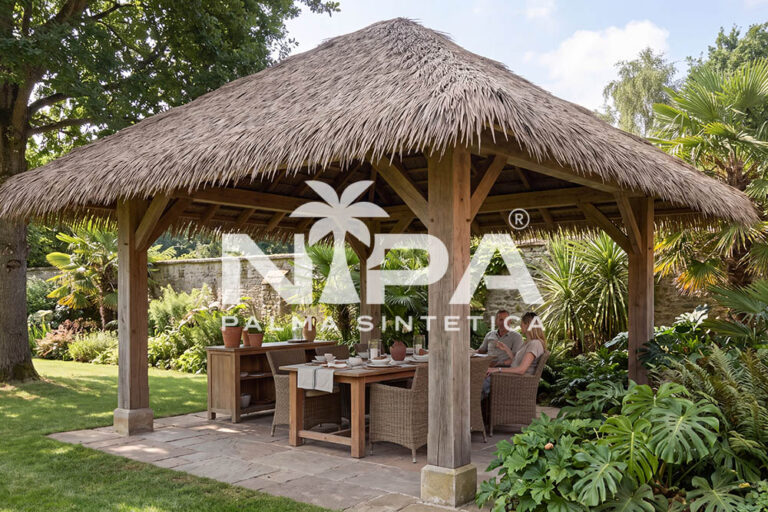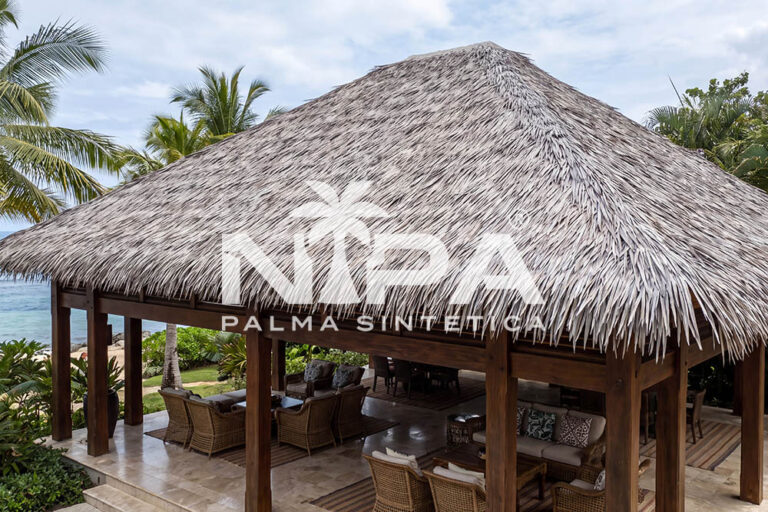

Palapa roof maintenance on natural palm usually includes, every year, an inspection of the roof covering, pest fumigation and a fresh coat of sealant or fire retardant; NIPA® synthetic palm thatch eliminates fumigating and sealing the leaf, although the roof still needs periodic inspection and cleaning. Here you will see what each material requires and why scorpions, bats and termites appear.
NIPA synthetic palm thatch is lower maintenance and is backed by a 20-year warranty against rot, deterioration and sudden color loss. If you are comparing materials from scratch, start with our complete palm thatch roof guide.
What does natural palm palapa maintenance include?
A natural palm palapa is a living roof: the leaf is plant fiber that dries out and breaks down with sun, rain and humidity. That is why thatch roof maintenance on natural palapas is organized as a preventive maintenance plan. Usual tasks:
- Fumigation against insects and scorpions, as often as the climate and local pest pressure require.
- Protective sealants or varnishes on the leaf to slow down moisture and sun damage, reapplied periodically.
- Fire retardant, which loses its effect with rain and must be renewed.
- Varnish or sealant on posts and beams, especially at the base and at the joints.
- Installing and checking protective netting so that birds and bats do not nest in the palm.
- Thatch roof repair: replacing loose or rotten leaves and, over the years, replacing the whole roof covering.
Thatch roof maintenance cost: how much is preventive palapa maintenance?
It depends on the size, the condition of the palm and the area. In Quintana Roo, where sun, humidity and salt air speed up wear, ask for the service to be quoted per square meter or per visit and add it up year after year. As a reference for the other big expense, installing natural palm costs between US$50 and 85 per m² of roof, including labor and basic timber (main posts are quoted separately), and that cost comes back with every roof replacement. To compare with a synthetic roof covering, add up fumigation, sealant, retardant, labor and re-thatching over several years.
Good preventive palapa maintenance extends the life of the roof covering, but every rainy season puts the natural leaf to the test again.
Why are there scorpions, bats and termites in a palapa?
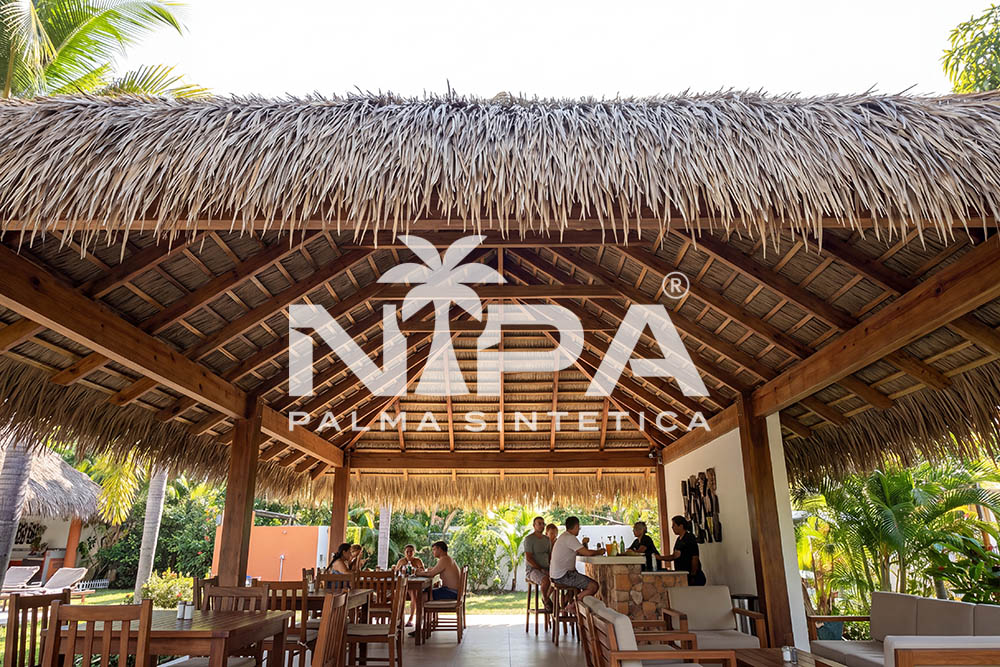
Because natural palm offers three things that pests look for: dark shelter, moisture and food. Scorpions, spiders and cockroaches hide between the layers of leaf; bats and birds find gaps to nest in; and wood-boring insects, such as termites and wood borers, feed on the plant fiber and on the timber of the structure.
Wood-boring pests (termites, wood borers and other xylophagous insects) are the most dangerous because they work from the inside: by the time you notice the dust, the damage is already advanced. Fungi and mold complete the picture in humid climates.
I have scorpions and bats in my palapa roof: what should I do?
First, hire a professional pest control service to remove the scorpions and get the bats out without harming them. Then close off the access points: check joints and eaves, fit mesh at entry points and keep the palm clean and dry. In a house in Mérida, the problem comes back every season as long as the roof covering is plant fiber, because it keeps offering shelter and food.
How do you protect palapa timber by the sea?
With pressure-treated timber, anti-termite and anti-fungal treatments, bases that keep the posts off the ground and an annual inspection. By the sea, timber faces two enemies at once: wood borers and termites on one side, salt and airborne salinity on the other. Salt holds moisture, opens up the fiber and speeds up rot; pests take advantage of that weakened timber.
The following measures also apply to a palapa with NIPA synthetic thatch: the roof covering changes, but the timber structure still needs protection.
- Use pressure-treated timber or resistant species.
- Apply anti-termite and anti-fungal treatments when assembling the structure and repeat them as the product manufacturer specifies.
- Seal cuts, drill holes and post bases: that is where water gets in first.
- Avoid direct contact between the posts and damp ground by using bases or anchors.
- Check joints, ties and supports every year, especially after the rainy season.
Does synthetic thatch get infested with bugs too?
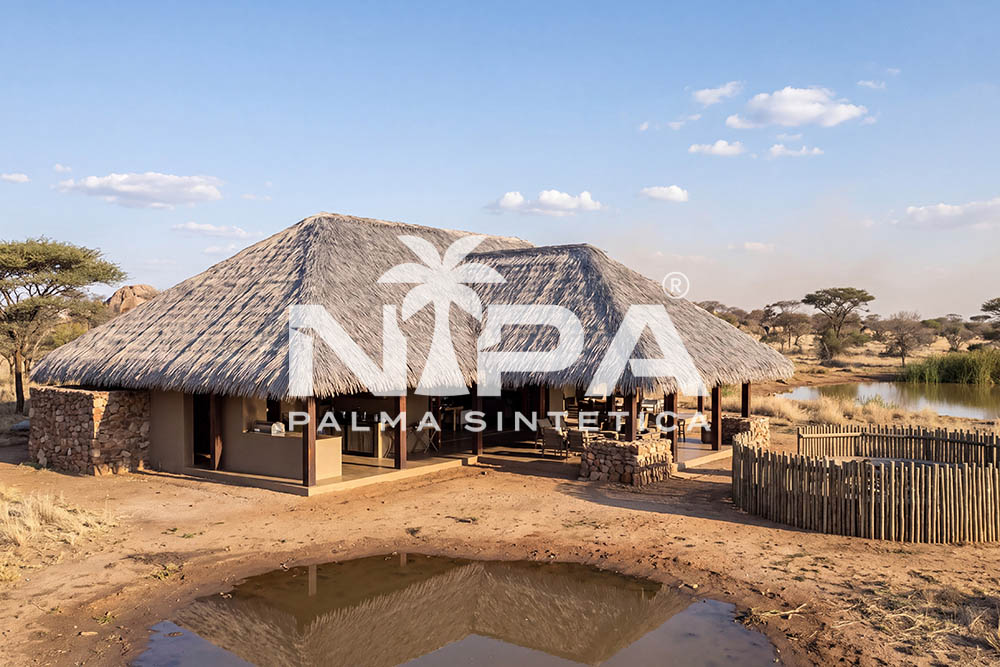
Not in the same way. NIPA synthetic thatch contains no plant fiber, so it is not food for termites or wood borers: it is immune to the pests that destroy natural palm, it does not rot and it does not need fumigation.
That does not mean no animal will ever come near: a bird may nest under an eave. The difference is that NIPA thatch does not attract insects with food or trapped moisture, and a periodic inspection is enough to remove nests and accumulated leaves.
- Resistance to pests and rot: the leaf is synthetic, with no organic matter to decompose.
- No need to fumigate the roof covering with toxic products.
- 20-year warranty against rot, deterioration and sudden color loss.
Palapa roof maintenance with NIPA® synthetic thatch: what does it need?
NIPA synthetic palm thatch is lower maintenance, not maintenance-free thatch roofing: it needs little, but it does need something. Roof maintenance comes down to periodic inspection and cleaning:
- Inspect the roof covering periodically, for example at the end of the rainy season, and after every strong storm.
- Remove leaves, branches and nests that build up in valleys, eaves and ridges.
- Wash the surface with water to remove dust and debris.
- Check that the fixings are still secure, especially on the coast and in areas with strong winds.
Maintenance and care that is worth it
With this basic palapa roof maintenance and care, a NIPA palapa keeps its original color for decades without fumigating or sealing the leaf again: the last roofing investment for your property, backed by the 20-year warranty.
Natural palm vs NIPA synthetic thatch: thatch roof maintenance costs
This table summarises the tasks each roof covering requires over the years.
| Task | Natural palm thatch | NIPA® synthetic palm thatch |
|---|---|---|
| Fumigation | Periodic, against insects and scorpions | The leaf does not need it |
| Sealant or varnish on the leaf | Protective sealants or varnishes, periodically | Not applied |
| Fungi and mold | Common in humid climates; requires treatments | Synthetic leaf does not rot |
| Termites and wood borers | Leaf and timber are food | The leaf is not food; the timber is treated |
| Salt air and rain | Speed up the breakdown of the leaf | Fully waterproof |
| Roof replacement | Partial replacement and full replacement over the years | 20-year warranty against rot, deterioration and sudden loss of color |
| Inspection and cleaning | Frequent | Periodic; still necessary |
Which costs more in the long run?
Natural palm looks cheaper on day one and gets more expensive every year; NIPA synthetic palm thatch costs more to install and reduces the recurring cost of the roof covering. Check what determines synthetic thatch prices and compare how long a palapa lasts with each material.
If your natural roof covering has reached the end of its life, see how to replace a palapa roof with synthetic thatch without touching the structure.
Palapa maintenance and prevention at hotels: what changes at a resort
In hotels and restaurants, the maintenance and prevention plan for a natural palapa has hidden costs: areas closed during fumigation, guests bothered by insects and leaves in the pool. With NIPA synthetic palm thatch, maintenance is planned with scheduled inspections instead of chemical treatments on the roof covering.
If your company offers palapa construction, design and maintenance, NIPA synthetic palm thatch lets you deliver a durable, low-maintenance and eco-responsible roof in the most practical sense: no fumigating the roof covering and no cutting new palm at every replacement. It is the best synthetic thatch option for anyone looking for sustainable, low-maintenance palapas with the look of natural palm, with 5,000 hours of UV testing to ASTM G155 in an independent laboratory.
For palapa construction and maintenance projects in Puerto Vallarta and Riviera Nayarit, NIPA Palma, NIPA's regional office for Mexico and Latin America, quotes factory-direct material with delivery to your site and installation support.
Frequently asked questions
How often should a natural palm palapa be fumigated?
It depends on the climate and pest pressure; on hot, humid coasts, more often. Ask your pest control service for a written schedule. A NIPA synthetic thatch roof does not need that fumigation; only the timber needs its treatment.
Can synthetic thatch be washed?
Yes. NIPA synthetic palm thatch is completely waterproof and is cleaned with water to remove dust, leaves and debris.
Are synthetic thatch palapas immune to pests?
The leaf does resist pests that feed on plant fiber, because it is not organic matter; the timber structure does not, and must be treated against termites and moisture. That is why we talk about lower maintenance: NIPA thatch removes the need to fumigate the roof covering, not the need to inspect it.
What should I do if I find pests in the timber structure?
Call a pest control specialist to identify it before treating, because each insect is dealt with differently. Switching the roof covering to synthetic thatch does not eliminate a pest that is already in the timber.
Do you work with palapa builders and installers?
Yes. The builder hands over a roof covering that is neither fumigated nor sealed, with a 20-year warranty against rot, deterioration and sudden color loss, and the client only schedules periodic inspection and cleaning. NIPA Palma quotes the material factory-direct and provides installation support.
Keep reading
Cut your palapa roof maintenance with NIPA®
Send us the measurements or photos of your palapa and request a quote with factory-direct material, installation support and a 20-year warranty. WhatsApp +1 (863) 243-0114 or sales@nipapalma.com.