
No loose leaves or insects on the tables, Class A FR version (ASTM E108) and a 20-year warranty. Get a quote today.
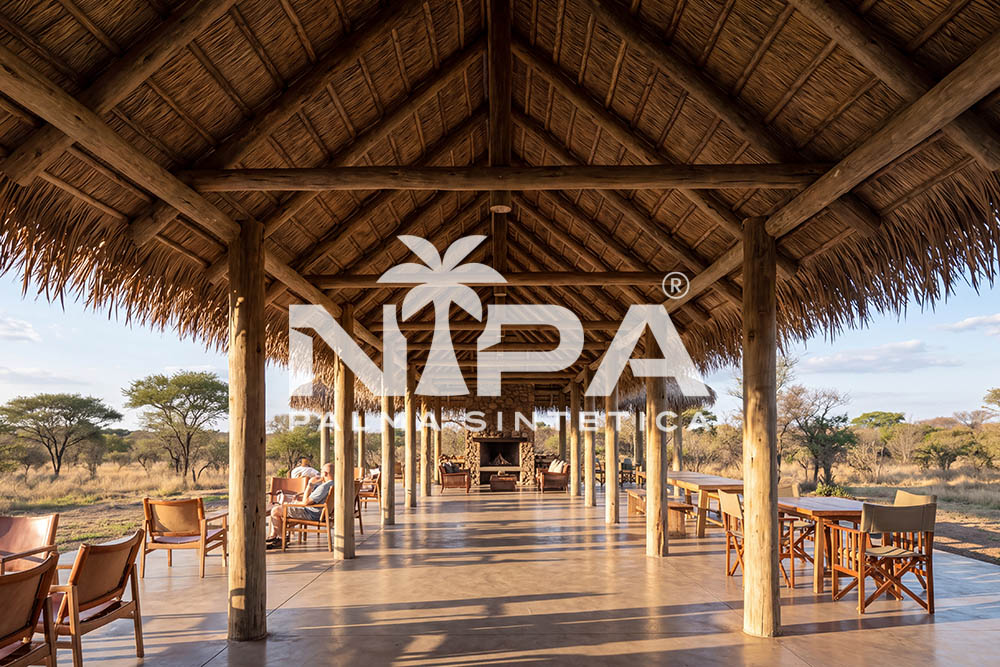
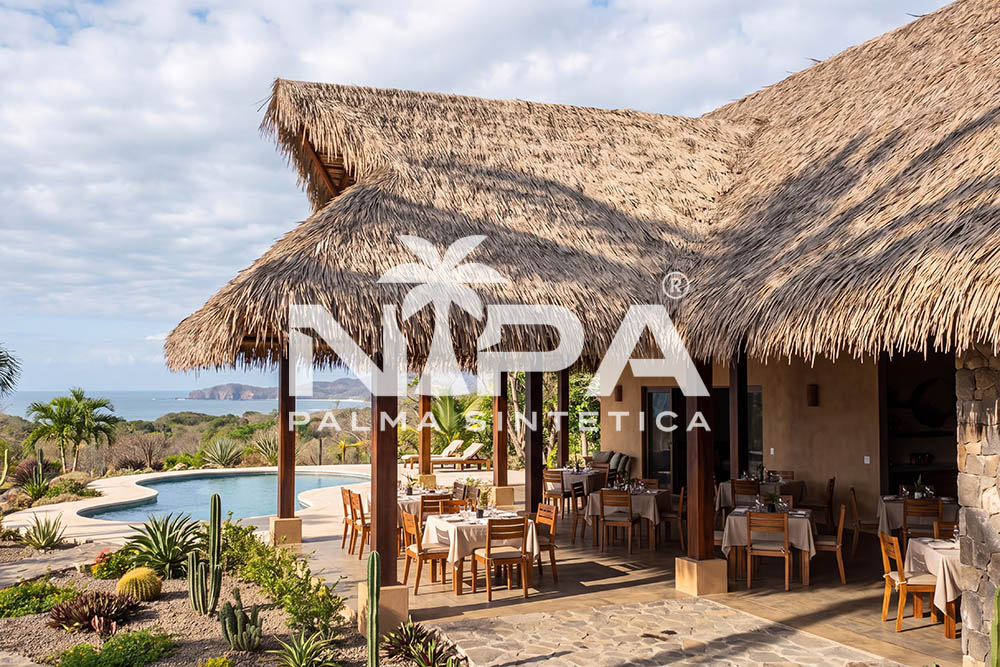
A thatch roof restaurant sells the experience before the menu: shade, breeze and the tropical-escape atmosphere your diners are looking for. With NIPA® synthetic thatch, that atmosphere comes without dust, insects or leaves falling onto the tables. It is premium quality for your business, with a 20-year warranty against rot, deterioration and sudden color loss.
NIPA has been a direct manufacturer since 2010. NIPA Palma, NIPA's regional office for Mexico and Latin America, quotes you factory-direct and supports you with installation, so you can focus on the kitchen and the service.
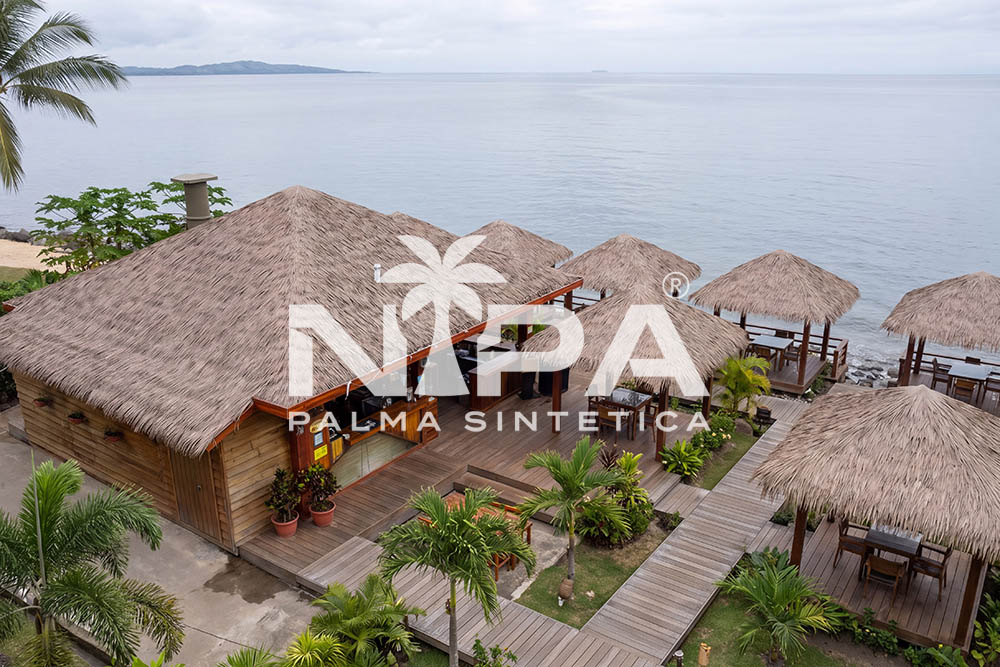
In a restaurant, the roof is part of hygiene. Natural palm sheds dust and fibers, attracts insects and needs fumigation. NIPA synthetic thatch does not attract insects, rodents or birds, does not rot and resists mold. Your team cleans the floor and the tables, not the roof.
It is also a roof that looks good in every photo your customers post: molded from natural palm leaves, in several tones and with two molds to avoid repeating patterns, it is the most realistic synthetic palm thatch for a dining room seen up close.
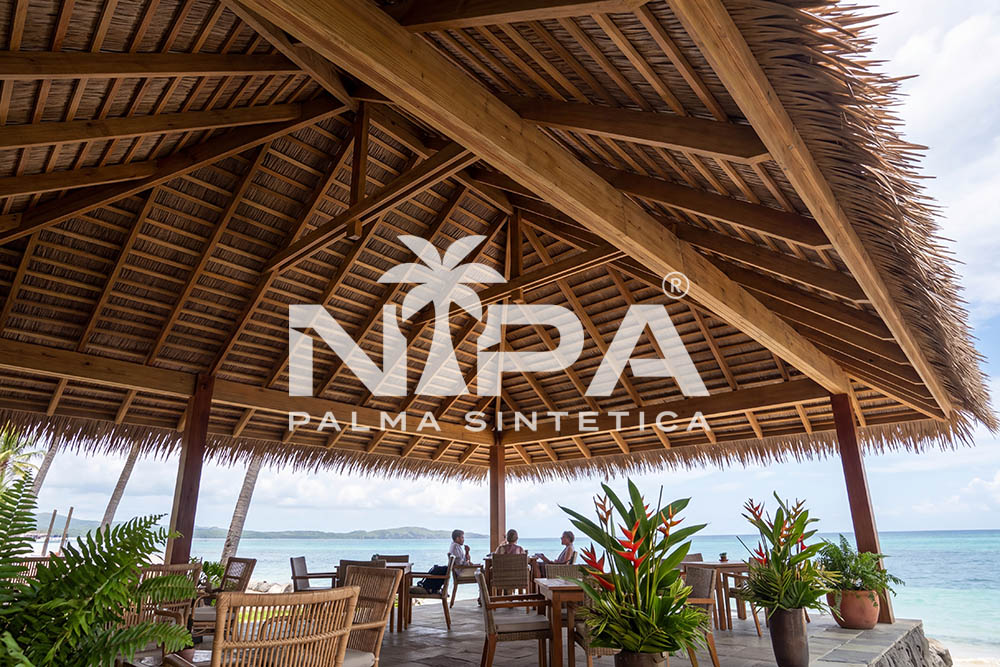
Each format has its own demands. NIPA uses the same panel in all of them, so a group with several venues keeps a single look.
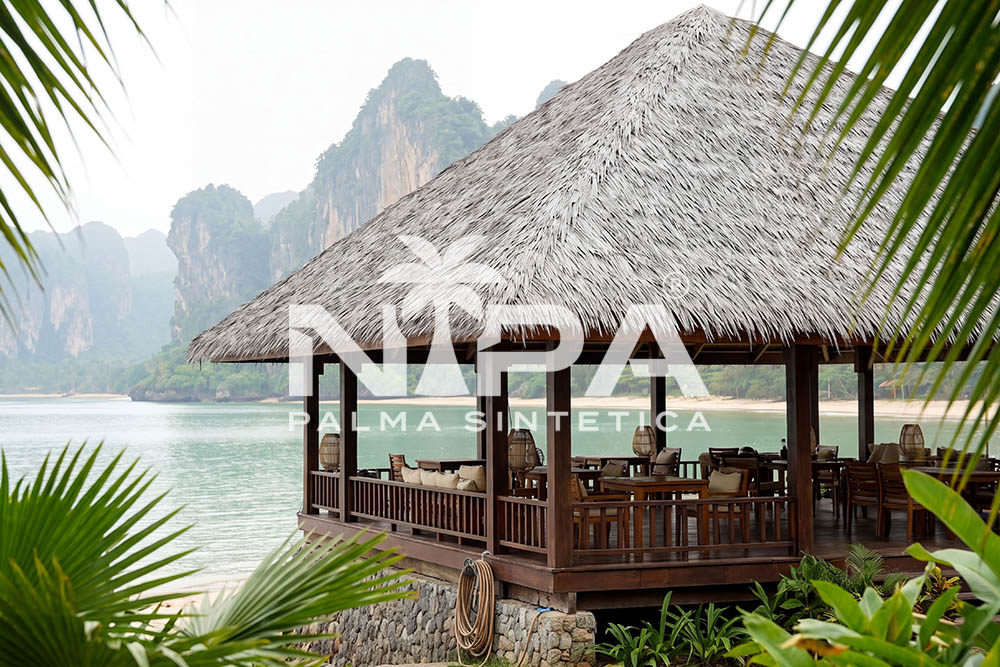
For themed restaurants serving Mexican, Caribbean or Polynesian food, the palapa is the stage set. NIPA synthetic thatch keeps that set looking the same on day one and ten seasons later, with no dark stains or gaps in the roof.
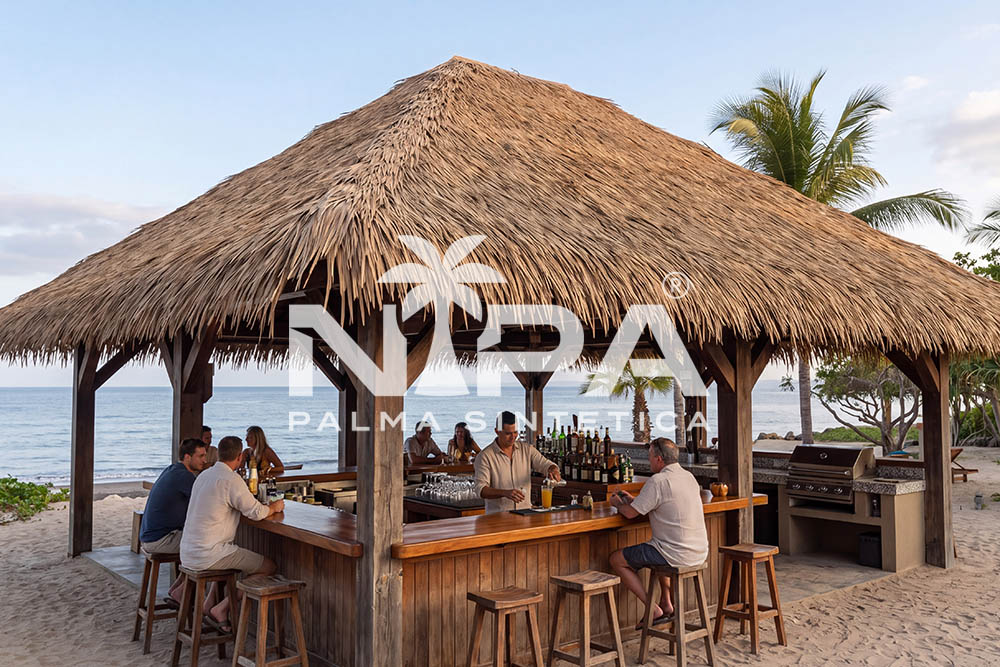
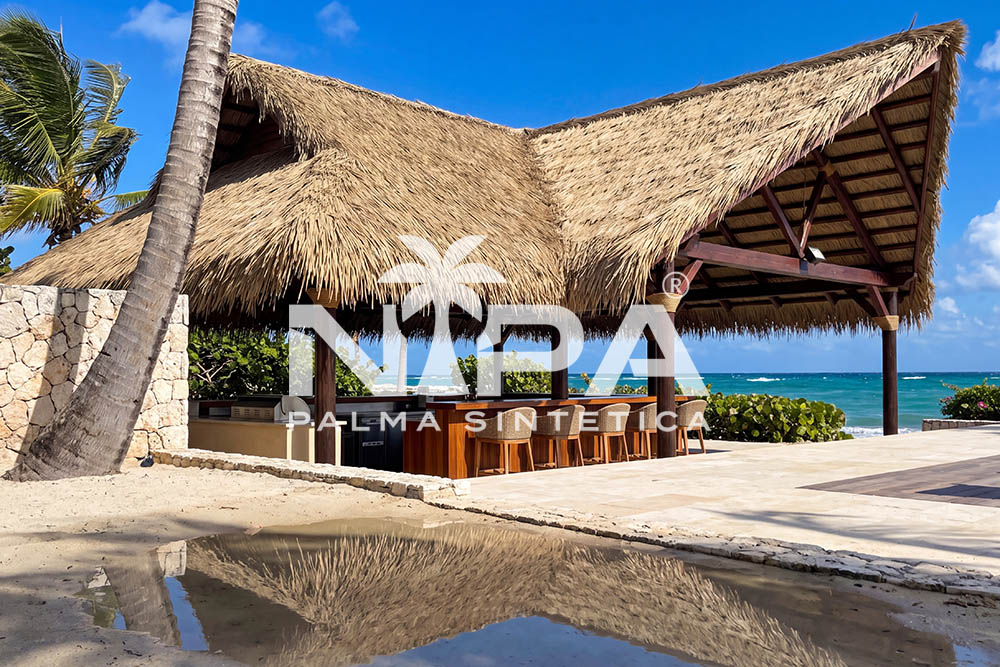
A palapa or tiki bar roof gets sun, splashes and humidity all day. In hotel and club pool bars, NIPA keeps leaves and fibers out of the drinks and the pool water, a frequent nuisance with natural palm.
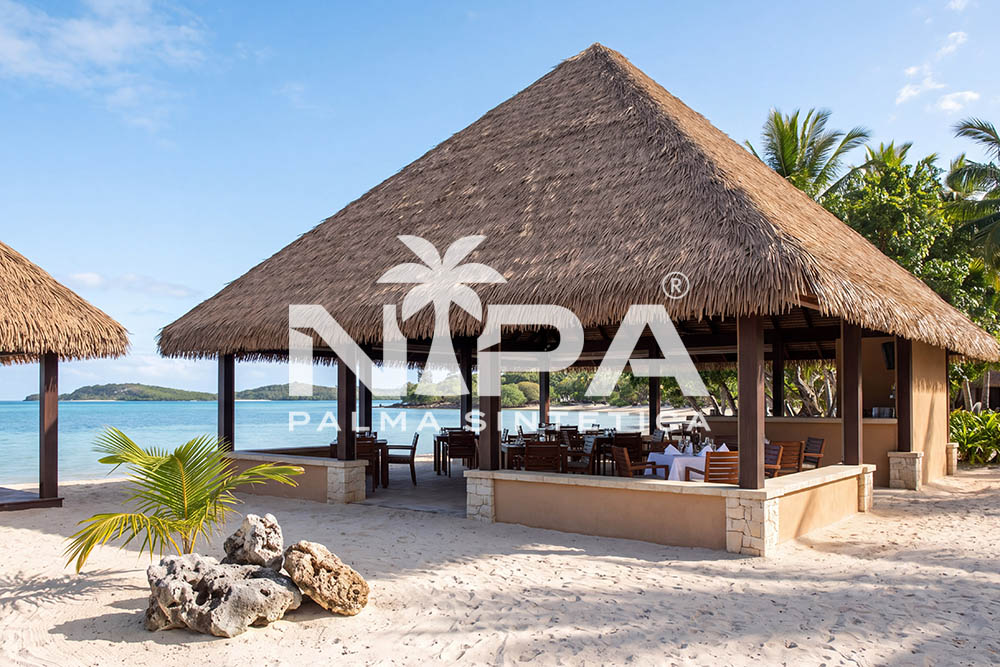
In a beach club, the roof works facing the sea: strong UV, salt spray and wind. NIPA synthetic thatch is designed for that setting. It works just as well in commercial spaces such as plazas, food parks, terraces and sales kiosks.
Yes, if the kitchen meets the local code and you specify the EmberSafe™ FR variant, with fire retardant built into the material, which is rated Class A to ASTM E108. The rating describes the roof’s performance against external fire in a standardized test; it does not replace the clearances, hood or extraction required by the authority. No roof, natural or synthetic, should be exposed to direct flame.
For details of the standard, read our guide on Class A ASTM E108 and our guide to fire retardant for palapas.
It depends on your state and municipality: Protección Civil (Mexico's civil protection authority) reviews the whole project, not just the roofing material. Arrive at the review with the roof documentation ready; with it, the process moves forward with more confidence.
Always confirm the requirements with the relevant authority before building.
A dining room with 80 m² of roof area takes 416 pieces (80 × 5.2). With 5 to 10% waste depending on the roof shape (more on small or conical roofs, less on large, simple roofs), that is 437 to 458 pieces, about 7 boxes, plus finishing pieces. All the data is in the synthetic thatch technical data sheet.
| Need | NIPA synthetic thatch data |
|---|---|
| Rain on the terrace | Fully waterproof |
| Sun all day | 5,000 hours of UV testing to ASTM G155 |
| Nearby kitchen or grill | The FR variant has a Class A rating to ASTM E108 |
| Hurricane season | 260 km/h, installed to NIPA specifications |
| Beach club roof construction | 93 × 70 cm panel, 5.2 pieces per m², minimum pitch 18°, on battens |
| Ordering | Box of 70 pieces ≈ 13.5 m²; pallet of 20 boxes ≈ 269 m² |
Send us the measurements or photos of your venue and we will reply with a piece count, samples and a quote. If your restaurant is part of a hotel, see also our page on synthetic thatch for hotels. For ideas from finished projects, visit the synthetic thatch project gallery.
No. NIPA synthetic thatch does not shed fibers or dust and does not attract insects, rodents or birds, so nothing falls onto the tables.
Less maintenance than natural palm: periodic inspection and cleaning, with extra attention to areas near the kitchen.
Per m² of material it can be; per complete project, no. NIPA synthetic thatch is light and compact (a 40 ft HQ container carries up to 8,557 m² in bulk), and with 22 cm exposure per leaf the structure needs fewer purlins, battens and fixings. Most important for your business: the dining room never closes for rethatching. Without the maintenance of natural palm, there is no rethatching, no fumigation and no areas closed for repairs; just periodic inspection and cleaning. In our projects, by around year 5 the investment has paid for itself and what follows is savings. Find out how much a palapa costs and request the quote for your project.
Yes, if the structure can take battens and a minimum pitch of 18°. We review photos and measurements before quoting.
Production normally takes 1–2 weeks, because the standard color is kept in stock. Door-to-door sea shipping, depending on the destination, takes approx. 70 days to Mexico City and 90 days to Cancún; we deliver to Colombia and Ecuador in about 2 weeks and to Peru with fast delivery from our warehouse in Panama; 30 days to the United States (15 days by air) and 50 days to Europe. NIPA ships to every country, with freight quoted to your destination, and NIPA Palma confirms the exact lead time with your quote.
Send us measurements or photos and receive a piece count, samples and a factory-direct quote. WhatsApp +1 (863) 243-0114 or sales@nipapalma.com.