A palapa's thatched roof can be insured, but for thatched roof insurance each insurer sets the premium and conditions with its own risk assessment, and on a palm thatch roof, fire is what matters most. You control the information you provide: what the material is, how it was installed and which tests back it up. With the FR model of NIPA® synthetic thatch, rated Class A under ASTM E108, you can present a specific test report. The final decision rests with your insurer or insurance broker.
This guide does not replace that advice or tell you what a specific insurer or your country's law requires: it gives you the questions worth asking and the documents NIPA can provide. For the big picture, see our palm thatch roof guide.
Is a thatch roof more expensive to insure?
There is no single public rate: each insurer decides whether to charge more or set conditions for a hotel with palapa roofs. Does the premium drop if you switch to synthetic thatch with a fire rating? We can't promise you a lower premium, but what you present does change: the FR model, rated Class A under ASTM E108 and tested by Intertek, makes the roof easier to insure and may help reduce the cost of insurance. Confirm it with your insurer or broker before roofing.
Be ready to talk about the roofing material and what is underneath: kitchens, grills, electrical installations and guest areas.
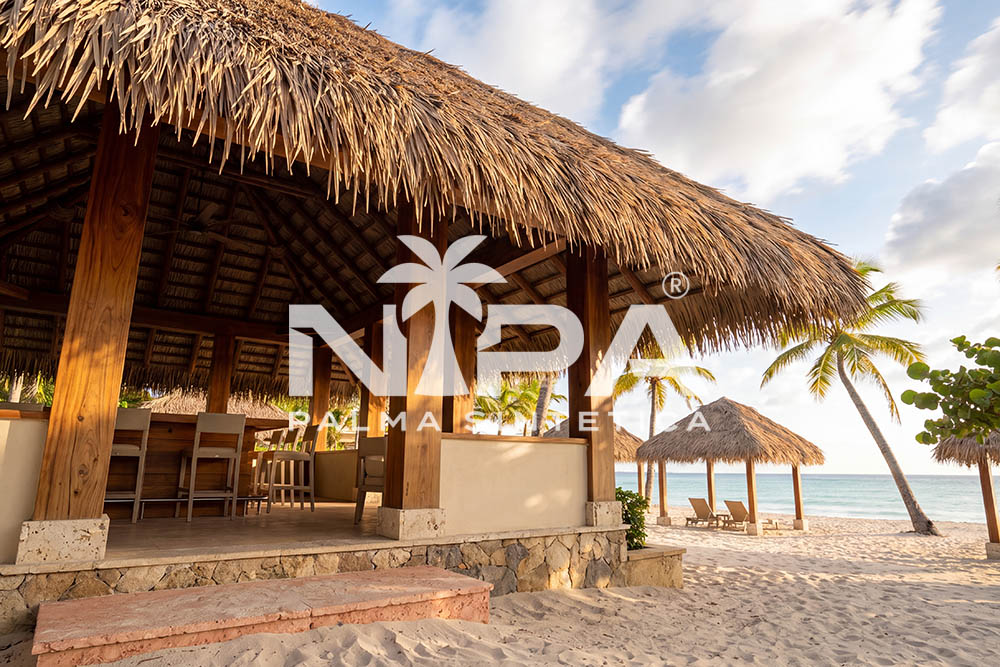
Why is fire the main concern on a palapa?
Because dry natural palm leaf is a highly combustible material and a large roof covering can carry fire from one building to another. According to Hosteltur (June 20, 2026), the fire at the Viva Wyndham Dominicus Beach in Bayahibe, Dominican Republic, spread rapidly across the cane-thatch roofs covering much of the common areas; 1,690 people were evacuated and a tourist died.
With natural palm, the usual control is sprayed fire retardant: TUI's fire safety guide for palapa roofs (January 2024 version) states that a professional should apply it every year or as often as a fire expert recommends. We explain it in the fire retardant guide for palapas.
No synthetic thatch is non-combustible, NIPA included. The difference lies in the FR model: tested by Intertek, an independent international laboratory for building materials testing, it is rated Class A under ASTM E108, an external fire test on the roof covering. The standard version has no fire rating.
Which document serves as fire retardant certification, and who issues it?
It depends on the material. If your palapa has treated natural palm, the certificate is usually issued by the company that applied the retardant and has an expiry date; if it is NIPA FR synthetic thatch, the technical document is the Intertek ASTM E108 Class A test report from the laboratory that did the test, which NIPA shares on request.
Ask your insurer in writing whether it accepts a material test report instead of an application certificate. To understand the test, read what Class A under ASTM E108 means, and what it doesn't.
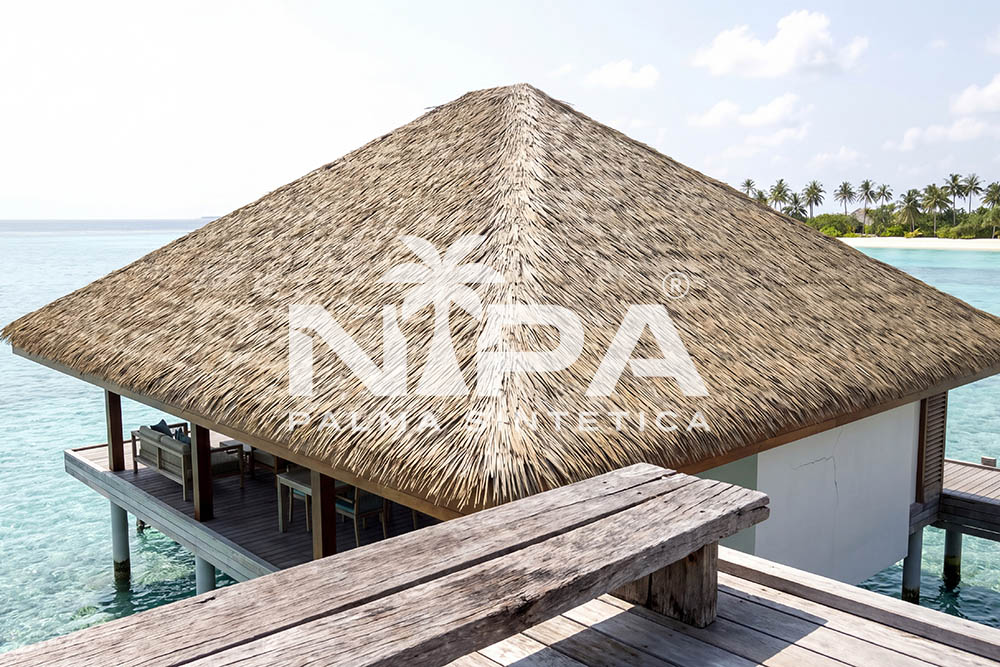
Thatch roof insurance requirements: which documents to prepare
These are the documents you can gather with NIPA Palma and your installer:
| Document | What it proves | Who provides it |
|---|---|---|
| ASTM E108 test report (FR model) | Class A rating of the tested roof covering | NIPA, on request; Intertek report no. 220927005SHF-001 |
| NIPA installation specifications | How the roof covering is fixed to withstand 260 km/h winds | NIPA |
| Installation record with photos | That the work followed those specifications | Your installer |
| Invoice with the product reference | Which version was installed: FR or standard | NIPA Palma |
| 20-year warranty | Coverage against rot, deterioration and sudden color loss | NIPA |
| Inspection and cleaning log | That the roof covering receives periodic maintenance | Your maintenance team |
Does hurricane insurance cover a palapa's thatch roof?
There is no general answer: it depends on how your policy is worded and whether the thatch roof is declared, and only your insurer or broker can confirm in writing whether it is covered, excluded or subject to its own deductible. Check with your insurer before roofing.
What you can document is wind: NIPA synthetic thatch has a wind resistance of 260 km/h when installed to NIPA specifications, backed by report 2756T0002.1 from PRI Construction Materials Technologies (ASTM D3161); that is why the installation record matters as much as the data sheet. More in our guide to palapas and hurricanes.
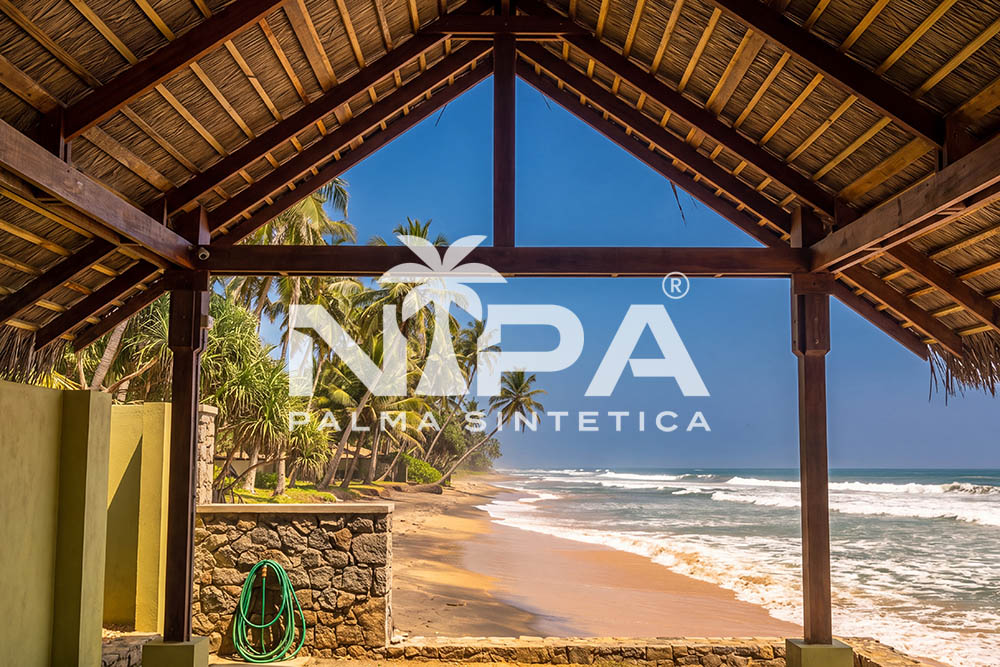
What to ask your insurer or broker before roofing
Ask before you buy and get the answers in writing: they make it easier to decide which areas get the FR model. See how we work with synthetic thatch for hotels and resorts. These are the key questions:
- How do you assess a natural palm roof versus a synthetic thatch roof with a fire rating?
- Do you accept the ASTM E108 Class A test report for the FR model, or do you need another document?
- Do you require a fire retardant certificate? How long is it valid?
- Is the thatch roof covered for hurricanes? Are there exclusions or a different deductible?
- If I replace the natural palm, does anything change in the premium or conditions?
Why NIPA® synthetic thatch is the best choice for documenting your thatched roof
Because every claim comes with verifiable data. NIPA has been a direct manufacturer since 2010, with its own ISO 9001-certified plant. The FR model is rated Class A under ASTM E108; the roof withstands 260 km/h winds when installed to NIPA specifications; and it passed 5,000 hours of UV testing under ASTM G155 at an independent laboratory. It also carries a 20-year warranty against rot, deterioration and sudden color loss: a long-term investment, with paperwork to back it up.
Frequently asked questions
Does synthetic thatch lower thatched roof insurance costs?
It can help, with the FR model. Its Class A rating under ASTM E108, tested by Intertek, makes the roof easier to insure and may help reduce the cost of insurance, but your insurer decides the premium: confirm with them before roofing. The FR model costs more upfront than the standard one and keeps its advantages over natural palm: less freight and structure, and no rethatching or fumigation. See the full calculation in how much a palapa costs.
Will the standard version do if my insurer asks for a fire rating?
No. The standard version has no fire rating; in that case, request the FR model.
Does NIPA synthetic thatch need maintenance?
Less maintenance than natural palm, but not zero: periodic inspection and cleaning. Keep the log in case your insurer asks for it.
My insurer has already asked for a specific document. What should I do?
Send us that requirement through the contact form, with drawings or photos of the palapa. We will tell you which NIPA document applies.
Go to your insurer with your documents ready
Get a quote for NIPA FR synthetic thatch and receive the technical documentation for the quoted product. Write to us on WhatsApp at +1 (863) 243-0114 or at sales@nipapalma.com.